
Texas homes and businesses deal with long summers, strong sunlight, and high humidity. Because of this, many property owners start looking for ways to reduce heat and improve comfort, especially in garages.
Before deciding, it helps to understand how insulation actually works and when it provides real value. Homeowners researching insulation alongside general garage door repair services in League City often find that the right decision depends on usage, not trends.
In this guide, we’ll look at how garage door insulation works, its benefits and limitations, typical costs, and when insulation makes sense for both residential and commercial garages in Texas. The goal is to help you decide based on real use cases, not assumptions.
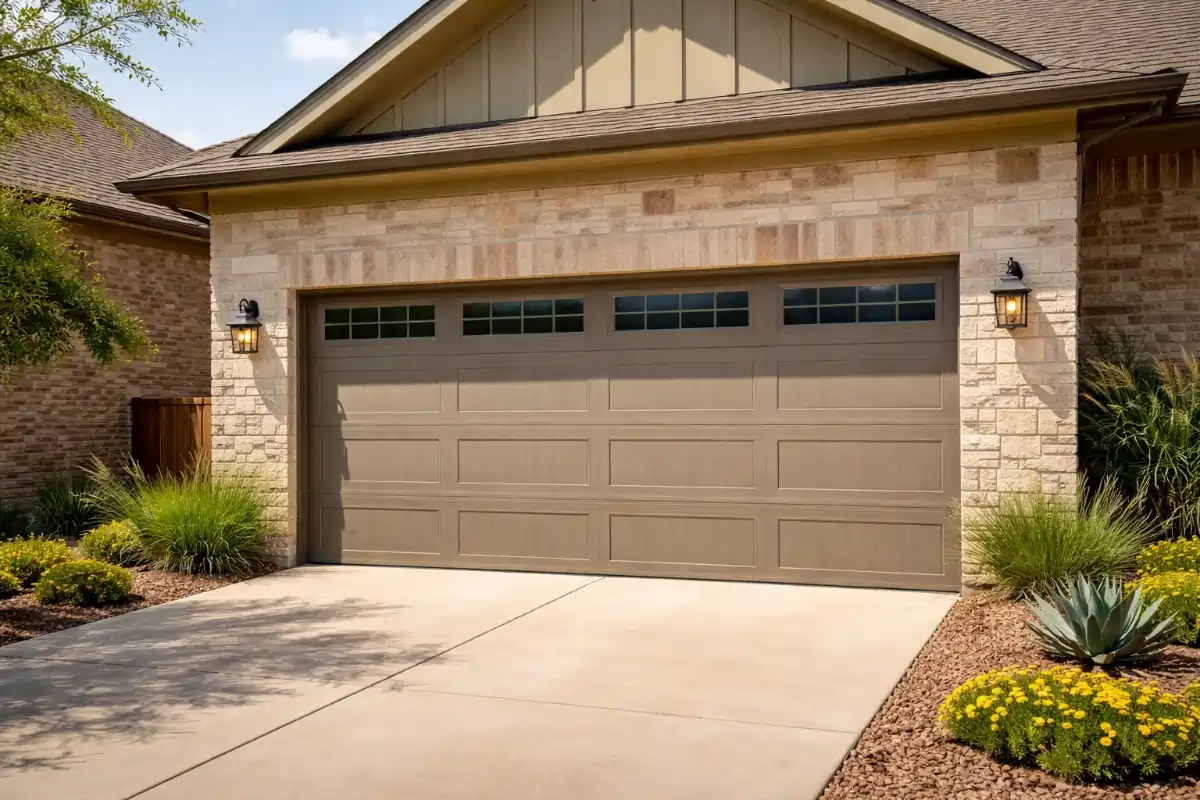
Texas experiences long periods of extreme heat, strong sunlight, and high humidity, all of which can cause garages to heat up quickly during the day. When a garage door is not insulated, that heat easily transfers inside, often affecting nearby living spaces or work areas and increasing overall indoor discomfort.
For attached residential garages and many commercial properties, insulation can help slow down heat transfer and reduce temperature fluctuations throughout the day. In these cases, improving the garage environment can also ease the workload on cooling systems, which is why many property owners choose to consult a professional before deciding whether insulation is the right solution for their situation.
Texas garages are exposed to intense heat for much of the year, especially when garage doors face direct sunlight for long hours. Without insulation, metal garage doors absorb heat quickly and allow it to transfer inside, causing garages to become significantly hotter than the outdoor temperature.
High humidity can make the problem worse by trapping warm air inside the space. Over time, this constant heat and moisture exposure can affect stored items, tools, and even the garage door components themselves.
Attached garages often share walls or ceilings with living or working areas, which means excess heat doesn’t stay confined to the garage. Warm air can move into nearby rooms, making indoor spaces harder to cool and less comfortable during peak summer months.
Garages used as workshops, storage areas, or commercial workspaces are even more affected by temperature changes. In these cases, insulation can help create a more usable environment by reducing heat buildup throughout the day.
When a garage stays excessively hot, cooling systems inside the building may have to work harder to maintain a comfortable temperature. Insulation can help reduce this strain by limiting how much heat enters through the garage door.
While insulation alone won’t turn a garage into a climate-controlled space, it can improve overall comfort and contribute to better energy efficiency. This is why many homeowners and business owners consider insulation as part of a broader strategy to manage heat and reduce energy waste.
Garage door insulation works by slowing down the transfer of heat between the outside and the inside of the garage. In hot Texas climates, the main goal is to reduce how quickly heat enters through the garage door during the day and how long it stays trapped inside.
Rather than cooling the space, insulation helps stabilize temperatures and limit extreme swings. This makes garages more manageable and reduces the impact they have on nearby residential or commercial spaces.
Insulation creates a barrier that reduces heat flow through the garage door panels. When sunlight heats the exterior surface of the door, insulated layers slow the movement of that heat into the garage interior.
This barrier effect is especially helpful for metal garage doors, which naturally conduct heat quickly. By reducing heat transfer, insulation helps keep the garage closer to the outdoor shade temperature rather than extreme surface heat.
R-value is a measurement that indicates how well a material resists heat flow. Higher R-values provide stronger insulation, but higher numbers are not always necessary for every situation in Texas.
According to the U.S. Department of Energy, R-value measures how well insulation resists heat flow, with higher R-values providing greater insulating effectiveness when properly installed.
For most residential and light commercial garages, moderate R-values are often sufficient to improve comfort. Choosing the right R-value depends on garage use, door type, and whether the space affects indoor areas.
You can Professional garage door service providers can guide you properly about what R-value is suitable to you according to your needs.
Insulation works best when combined with proper airflow control. While insulation slows heat transfer, gaps around the door can still allow hot air to enter if weatherstripping is worn or damaged.
This is why insulation is often paired with improved seals and bottom door gaskets. Together, they help reduce drafts, limit air leakage, and improve overall garage door performance.
Garage door insulation is not a one-size-fits-all upgrade, and the right option depends heavily on the door itself, the climate, and how the garage is used. In Texas, where heat is the primary concern, some insulation types perform better than others, especially when garage doors are exposed to long hours of direct sunlight.
Homeowners and business owners often choose insulation based on price alone, but performance and durability matter just as much. Understanding how different insulation materials behave over time helps prevent wasted money and disappointing results.
Polystyrene insulation is commonly found in rigid panels that are added to existing garage doors. It provides a basic level of thermal resistance and is often chosen for residential garages where cost and ease of installation are important factors.
Polyurethane insulation is foam-injected and bonds directly to the door panels, creating a more solid and sealed structure. Because it fills gaps and adds rigidity, it usually offers better insulation performance and is frequently used in factory-insulated doors for both residential and commercial applications.
Reflective insulation works differently from traditional foam insulation by reducing radiant heat rather than blocking airflow. This can be especially helpful in Texas, where the sun heats metal garage doors quickly and raises surface temperatures throughout the day.
While reflective insulation does not provide the same R-value as foam-based options, it can still reduce heat gain when installed correctly. It is often used alongside other insulation methods rather than as a complete solution on its own.
Insulated garage doors are manufactured with insulation built into the panels, which results in more consistent performance and better long-term durability. These doors are often recommended when replacing an old or damaged door, as they combine insulation with improved structural strength.
Insulation kits are designed to upgrade existing doors and are usually more affordable upfront. However, their effectiveness depends on the door’s condition, proper installation, and how well the garage is sealed against air leaks.
Garage door insulation offers more than just basic temperature control, especially in hot Texas climates where garages can heat up quickly. When insulation is added correctly, it can improve comfort, protect stored items, and reduce stress on nearby indoor spaces. The real benefits become noticeable when the garage plays an active role in daily home or business use.
According to ENERGY STAR, 9 out of 10 homes in the USA are not properly insulated. By properly sealing and insulating your homes, including your garages, you can achieve maximum comfort and can effectively reduce utility bills cost up to 10%.
Not every garage will see the same results, but many property owners experience improvements that go beyond expectations. Understanding these benefits helps determine whether insulation is a practical upgrade or simply an optional improvement.

Insulating a garage door helps slow down the transfer of heat from outside into the garage interior. This can prevent the space from reaching extreme temperatures during peak afternoon hours. As a result, the garage remains more stable and easier to use throughout the day.
For attached garages, insulation can also reduce heat transfer into the home or building. Nearby rooms often feel less affected by outdoor temperatures. This can improve overall comfort without relying solely on air conditioning.
Insulated garage doors tend to absorb sound better than non-insulated doors. This helps reduce noise from traffic, equipment, or nearby activity entering the garage. It also minimizes vibration and rattling when the door opens or closes.
For workshops or commercial environments, reduced noise can make the space more functional. Insulation helps limit sound transfer between work areas and surrounding rooms. This benefit is often overlooked but becomes noticeable over time.
Insulation can add rigidity to garage door panels, making them less prone to bending or denting. Stronger panels often lead to smoother operation and better alignment over time. This can reduce wear on tracks, rollers, and hinges.
A more solid door may also perform better during windy conditions or daily use. For older systems, insulation combined with basic maintenance can improve reliability. In some cases, a professional maintenance check helps ensure the door can handle the added weight safely.
Garage door insulation is worth considering when the garage has a noticeable impact on comfort, energy use, or daily activities inside the property. In Texas, garages often become heat reservoirs, and when they are closely connected to living or working spaces, that heat does not stay isolated for long. In such cases, insulation can play a meaningful role in reducing heat transfer and improving overall usability.
Rather than viewing insulation as a general upgrade, it helps to look at how the garage is actually used. When the garage serves more than just a parking function, insulation usually delivers more practical value.
Attached residential garages share walls, ceilings, or floors with the home, which allows heat to move gradually into adjacent rooms. During long Texas summers, this can make nearby bedrooms, kitchens, or living areas feel warmer and harder to cool, even when the air conditioning is running consistently.
Insulating the garage door helps reduce one of the largest sources of heat entry into the garage. Over time, homeowners often notice more stable indoor temperatures and fewer temperature spikes near garage-adjacent spaces, especially in the afternoon and early evening.
Commercial garages and service areas are often used throughout the day, which makes temperature control more important than in residential settings. Excessive heat can affect employee comfort, slow down work, and create an unpleasant environment in spaces that require focus or physical activity.
Insulation helps limit heat buildup inside these work areas and reduces how much external heat enters through the garage door. For businesses that operate repair bays, workshops, or storage areas, insulation can contribute to a more consistent and manageable working environment.
Garages used for storage or personal workshops often contain tools, materials, or equipment that are sensitive to high temperatures. Prolonged heat exposure can shorten the lifespan of stored items or make the space uncomfortable to use during warmer months.
By insulating the garage door, temperature swings can be reduced, making the space more functional throughout the year. When combined with proper sealing and ventilation, insulation often turns a rarely used garage into a more practical and usable area.
While garage door insulation can be beneficial in many situations, it does not make sense for every property or use case. In Texas, some garages experience heat but do not significantly affect comfort or energy use inside the home or business, which limits the practical value of insulation.
Understanding these situations helps avoid unnecessary upgrades and expenses. In some cases, simpler improvements or different solutions may provide better results than insulation alone.
Detached garages that are not connected to the main building typically have little impact on indoor comfort. Since heat buildup in these spaces does not transfer into living or working areas, insulation often provides minimal benefit.
If the garage is mainly used for parking or occasional storage, insulation may not noticeably improve usability. In such cases, basic ventilation or shade can sometimes address heat concerns more effectively.
Insulation cannot compensate for structural problems such as gaps, warped panels, or worn weatherstripping. When hot air can easily enter through openings, insulated panels alone will not prevent heat buildup inside the garage.
Addressing sealing issues and repairing damaged components usually delivers better results before adding insulation. A professional inspection can help identify whether basic repairs should be prioritized over insulation.
Older garage doors may lack the strength or balance required to support added insulation safely. Adding weight to an aging system can create operational issues and increase strain on springs and openers.
In these cases, replacing the door with a factory-insulated model may be a more practical long-term solution. This approach often improves performance, safety, and insulation at the same time.
Garage door insulation costs in Texas can vary widely depending on whether insulation is added to an existing door or included as part of a full door replacement. Factors such as door size, insulation type, garage use, and whether the property is residential or commercial all influence the final cost.
Instead of focusing only on the cheapest option, it helps to look at what level of performance is needed. In many cases, the right choice balances upfront cost with long-term comfort, durability, and energy efficiency.
Basic insulation kits for residential garage doors are generally the most affordable option and are often used for standard single or double doors. These kits usually provide moderate insulation improvement and are best suited for garages that are already in good condition.
Higher-performance insulation and factory-insulated doors cost more but tend to offer better durability and consistent results. Commercial garage doors typically fall on the higher end of the price range due to larger openings, heavier materials, and increased usage.
The table below outlines common garage door insulation options and what property owners can realistically expect to pay. These ranges reflect current pricing trends and may vary based on door condition, labor, and materials used.
| Insulation Option | Typical Cost Range | Best For |
|---|---|---|
| DIY Insulation Kit (materials only) | $40 – $170 | Budget upgrades on existing doors |
| Professional Insulation (existing door) | $150 – $500+ | Improving insulation without door replacement |
| Insulated Garage Door (Single-car) | $750 – $1,900+ | Replacing older residential doors |
| Insulated Garage Door (Two-car) | $1,500 – $3,700+ | Standard two-car garages |
| Large or Premium Insulated Doors | $3,000 – $6,000+ | Commercial or custom installations |
Residential insulation projects are usually less expensive because doors are smaller and systems are simpler. Costs tend to stay lower when the door is in good condition and does not require spring, track, or opener adjustments.
Commercial insulation projects often cost more due to larger door sizes, heavier materials, and higher usage demands. Businesses may also choose higher-performance insulation to support energy efficiency or workspace comfort, which can increase overall cost.
In some situations, adding insulation to an existing door is the most cost-effective solution, especially when the door is structurally sound. This approach can improve comfort without the higher expense of full replacement.
However, when insulation costs approach the price of a new insulated door, replacement may offer better long-term value. A professional evaluation can help determine whether upgrading the door or insulating the existing one makes more sense for the property.
Commercial garage doors are often larger, heavier, and used far more frequently than residential doors, which changes how insulation performs and what benefits it provides. In Texas, commercial spaces such as service bays, warehouses, and workshops can trap a significant amount of heat, especially when doors are opened and closed throughout the day.
For many businesses, insulation is less about comfort and more about maintaining workable conditions. Reducing heat buildup can improve productivity, protect equipment, and create a more stable indoor environment.
Commercial properties commonly use sectional steel doors, rolling steel doors, or large service bay doors. These door types tend to absorb heat quickly due to their size and metal construction, especially when exposed to direct sunlight.
Insulating these doors helps reduce surface heat and limits how much warmth transfers inside. The effectiveness depends on whether insulation is built into the door or added later as an upgrade.
Insulation can help reduce energy loss in commercial spaces that rely on cooling systems to maintain a comfortable working temperature. By limiting heat transfer through the garage door, businesses may experience more consistent indoor conditions during operating hours.
Noise control is another important benefit in commercial settings. Insulated doors often operate more quietly and help reduce sound transfer between work areas, offices, and neighboring spaces.
Insulation is most valuable for businesses that spend extended periods working inside the garage area. Repair shops, service centers, and storage facilities often see the most noticeable benefits.
For businesses with limited garage use or open-air operations, insulation may offer less value. In these cases, evaluating door condition and overall workflow helps determine whether insulation is a practical investment.
Adding insulation to a garage door changes more than just temperature control; it also affects how the entire system operates. In Texas, where garage doors are often large and frequently used, these changes can impact safety, balance, and long-term performance if they are not handled correctly.
Understanding these considerations before insulating helps prevent avoidable problems later. This is why insulation decisions are often paired with a basic inspection of the door and its components.
Insulation increases the overall weight of the garage door, which directly affects how the door opens and closes. If the springs are not properly adjusted for the added load, the door may feel heavier, move unevenly, or struggle during operation.
Poor balance can also create safety risks, particularly during manual use or power outages. Ensuring the door is correctly balanced after insulation helps maintain smooth and safe operation.
A heavier garage door can place extra strain on the garage door opener, especially if the opener is older or designed for lighter doors. Over time, this added stress can shorten the lifespan of the motor, gears, and drive system.
Proper spring tension and alignment reduce unnecessary strain on the opener. A professional check can confirm whether the existing opener can safely handle the insulated door.
Before adding insulation, it is important to check the condition of the door, tracks, rollers, and hardware. A proper maintenance walkthrough is recommended before adding insulation to the doors. Existing issues such as worn components or misalignment can become more noticeable after insulation is installed.
A professional inspection helps identify these problems early and ensures the door remains safe and reliable. This step often prevents unexpected repairs and performance issues after insulation is added.
If you are located in League City, we at Forge Garage Door Repair can offer you professional garage door inspection services. Call +1 (713) 275-8734
Garage door insulation can help lower energy bills when the garage directly affects indoor spaces. In attached garages, insulation reduces heat transfer into nearby rooms, which can lessen the workload on air conditioning systems during hot Texas summers. While the savings may not always be dramatic, many homeowners notice more stable indoor temperatures and improved comfort.
In Texas, extremely high R-values are usually unnecessary for garage doors. Moderate R-values often provide enough thermal resistance to reduce heat gain without adding excessive cost or door weight. The ideal R-value depends on garage use, door material, and whether the space is attached to living or working areas.
Yes, insulation can help protect stored items by reducing extreme temperature swings inside the garage. Items such as tools, paint, electronics, and stored materials are less exposed to prolonged heat when insulation slows heat transfer. While insulation does not fully climate-control the space, it creates a more stable environment overall.
Garage door insulation can last many years when properly installed and maintained. Foam-based insulation and factory-insulated doors tend to be more durable than add-on kits, especially in high-heat conditions. Longevity also depends on door condition, exposure to moisture, and how frequently the door is used.
Insulation can be safe for older garage doors, but only if the door is structurally sound. Adding insulation increases door weight, which may strain springs, cables, or openers that are already worn. A professional inspection helps determine whether insulation is safe or if repairs or replacement are a better option.
Insulation alone does not eliminate humidity, but it can help reduce how much warm, moist air enters the garage. When combined with proper sealing and ventilation, insulation can make humidity levels more manageable. This can help limit moisture-related issues such as rust, condensation, and material damage.
Garage door insulation can be worth it in Texas when it addresses a real issue, such as excessive heat, temperature transfer into nearby rooms, or uncomfortable working conditions inside the garage. Attached garages, home workshops, and many commercial spaces tend to see the most benefit, as insulation helps reduce heat buildup and creates a more stable environment throughout the day. In these situations, insulation often improves comfort and usability rather than serving as a cosmetic upgrade.
That said, insulation is not always the best solution for every garage. Detached or rarely used garages may see limited improvement, and older or damaged doors may need repairs or replacement before insulation makes sense. If the goal is to avoid unnecessary cost and choose the right approach, a quick professional assessment can help clarify whether insulation, basic repairs, or a door upgrade is the better option for your specific situation.
Reach out to us for expert garage door insulation services in League City, Texas.
Solving Your Garage Door Issues the Right Way
The most trusted residential and commercial garage door repair experts in League City
Monday–Friday, 8 AM–6 PM for Regular Appointments
24/7 Availability for Emergencies
Explore
Services
Copyright © 2025 | Forge Garage Door Repair – Expert Services In League City

