
Your garage door just made a loud grinding noise and stopped halfway up. Or maybe it’s shaking like it’s about to fall apart every time you open it. Whatever the problem is, you’re probably wondering the same thing every League City homeowner asks: how much is this going to cost me?
Here’s the thing about garage door repairs. The price can swing wildly depending on what’s actually broken. A simple sensor adjustment might run you less than what you’d spend on dinner for two. But a full spring replacement with labor? That’s a different story.
Most folks in League City don’t think about their garage door until something goes wrong. And when it does go wrong, it usually happens at the worst possible time. You’re late for work, or you just got home with a car full of groceries, and suddenly you’re stuck.
The good news is that most garage door problems are fixable without breaking the bank. The key is knowing what you’re dealing with and what a fair price looks like in our area. League City has dozens of garage door companies, and their quotes can vary by hundreds of dollars for the exact same repair.
This guide breaks down every common repair cost you might face in 2026. We’re talking real numbers based on what local technicians are actually charging right now. No vague estimates or national averages that don’t apply to our market.
Whether you need a quick fix or you’re facing a major repair, you’ll know what to expect before any technician shows up at your door. And if you need help right now, our team at Forge handles everything from simple adjustments to complete replacements. We’ve been fixing garage doors in League City long enough to know what works and what doesn’t.
Let’s start with the most important question on your mind.
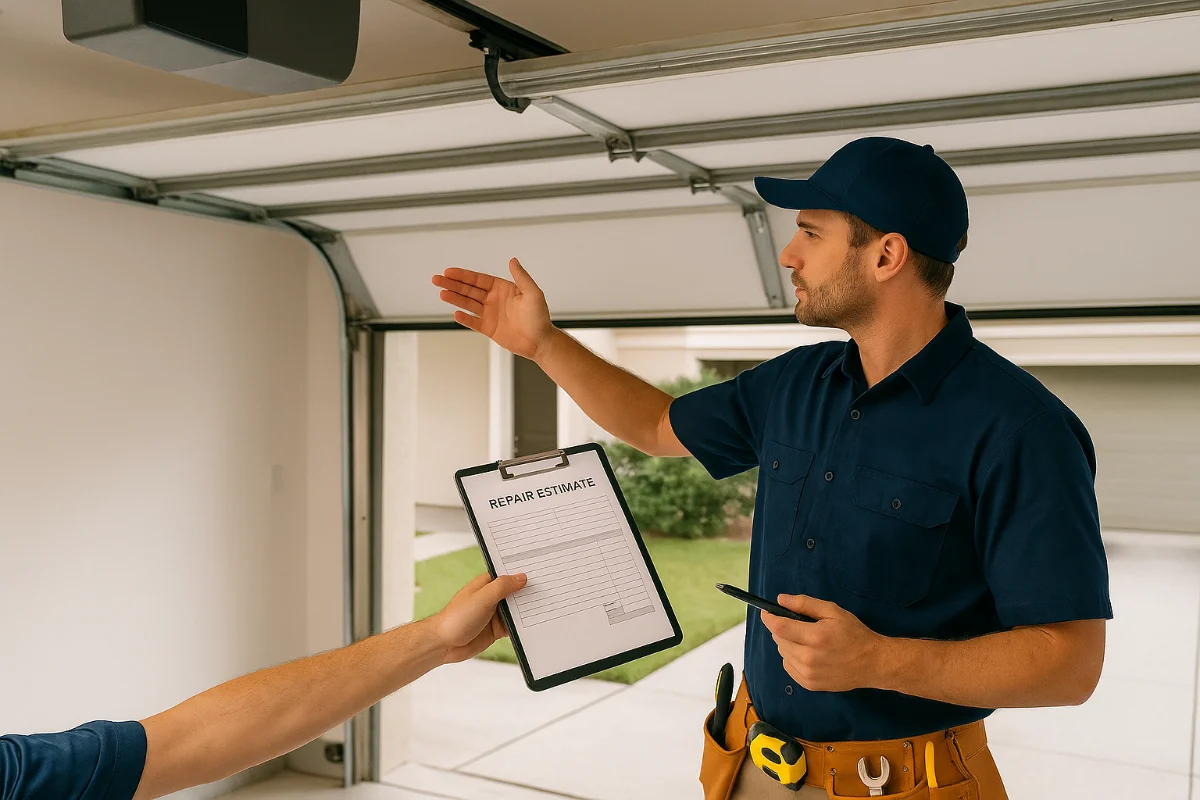
The typical garage door repair in League City will cost you somewhere between $150 and $400. That’s what most homeowners end up paying when they call a local company for a standard repair job.
But here’s where it gets tricky. That range is about as useful as saying a car costs between $20,000 and $80,000. Technically true, but it doesn’t tell you much about what you’ll actually pay.
Some repairs come in under $100. Others push past $600 or even higher. The final number depends on what broke, how complicated the fix is, and whether other parts failed because of the original problem.
Industry pricing guides such as HomeGuide’s garage door repair cost breakdown show that repair prices vary widely based on the issue, parts involved, and labor requirements.

Spring replacements typically land in the $200 to $400 range for most League City homes. That’s usually the most common repair call we see. Springs wear out over time, and when they snap, your door isn’t going anywhere.
Opener repairs usually run between $150 and $350 depending on what’s wrong with the motor or circuit board. Sometimes it’s just a gear that needs replacing. Other times the whole opener is shot.
Cable repairs fall into the $180 to $300 range in most cases. Cables don’t break as often as springs, but when they do, it’s usually because the door is out of balance or the drums are worn.
Roller and hinge work tends to be cheaper, usually $120 to $250 total. These are smaller parts, but replacing them takes time and skill if you want the door to operate smoothly.
Panel replacement is where costs start climbing. A single panel might cost $250 to $500 depending on your door style and whether the company can find a matching panel. Older doors with discontinued styles get expensive fast.
A broken spring means your door isn’t opening without a fight. You might be able to lift it manually if you’re strong enough, but your opener won’t budge it. The door will feel incredibly heavy because those springs were doing most of the work.
Spring replacement is one of the most common repairs in League City. Most residential springs last somewhere between 7 and 12 years depending on how often you use your door. If you open and close your garage four or five times a day, you’re looking at the shorter end of that range.
Replacing a single torsion spring typically costs between $200 and $300 in League City. That price includes the spring itself, labor, and the service call. The spring might only cost $40 to $80, but the installation requires specific tools and knowledge to do it safely.
Double torsion spring systems run higher, usually $250 to $400 for both springs. Most techs recommend replacing both springs at the same time even if only one broke. The other spring has been under the same stress and will likely fail soon anyway.
Heavier doors need larger springs with more winding capacity. A standard 16×7 insulated steel door uses different springs than a lightweight aluminum door. The heavier the door, the more you’ll pay for the correct springs. Commercial-grade springs for extra heavy doors can push costs up by another $50 to $100.
Extension spring replacement usually costs less than torsion springs, typically $150 to $250 for both sides. These springs are simpler to install and don’t require the specialized winding tools that torsion springs need.
You should always replace extension springs in pairs. If the left side broke, the right side is under the same wear and tear. Replacing just one side leaves your door unbalanced and puts extra strain on the new spring.
Most extension spring jobs also include replacing the safety cables that run through the springs. These cables prevent a broken spring from flying across your garage and hitting someone or something. They add about $20 to $40 to the total cost but they’re worth every penny for safety.
Opener problems show up in different ways. Sometimes the motor hums but nothing moves. Other times the door goes up a foot and stops. You might hear grinding noises or clicking sounds that weren’t there before. The issue could be a $15 gear or it could be a fried circuit board that costs ten times that much.
Most opener repairs in League City fall somewhere between $150 and $350 depending on what failed and how old the unit is. Replacement runs higher, typically $300 to $600 installed, but sometimes that’s the smarter move than throwing money at an opener that’s on its last legs.
Most garage door companies charge a service call fee just to come out and figure out what’s wrong. In League City, that typically runs $75 to $125. Some companies waive this fee if you go ahead with the repair, while others charge it regardless.
A good technician will test the opener motor, check the gear and sprocket assembly, inspect the circuit board for burned components, and verify that the safety sensors are communicating properly. They’ll also check whether the problem is actually the opener or if it’s something else making the opener work too hard.
Gear and sprocket replacement is one of the most common opener repairs. The plastic gear that drives the chain or belt wears down over time and eventually strips out. This repair usually costs $150 to $250 including parts and labor. The part itself only costs $20 to $40, but getting to it requires disassembling half the opener.
Circuit board replacement runs higher, typically $200 to $350 depending on the opener brand and model. Modern opener circuit boards control everything from the Wi-Fi connection to the safety sensors to the LED lights. When they fail, you often can’t just repair them. Generic replacement boards exist for some popular models and cost less than manufacturer boards.
Motor replacement costs almost as much as a new opener in many cases, usually $250 to $400. At that point, most techs will recommend just replacing the whole unit unless it’s a high-end model with a long warranty.
Chain drive openers are the most common and usually the most affordable option. A new chain drive opener installed typically costs $300 to $500 in League City. These are loud but reliable and can handle heavy doors without much trouble.
Belt drive openers cost a bit more, usually $400 to $600 installed. They run much quieter than chain drives, which matters if you have bedrooms above or next to the garage.
Direct drive openers represent the premium option, typically $500 to $700 installed. These have the motor travel along a stationary chain instead of the chain moving. They’re extremely quiet and have fewer moving parts to wear out.
A broken cable usually happens suddenly, often right after a spring breaks or because the door got stuck and someone forced it. You’ll notice one side of the door hanging lower than the other, or the door sitting at an angle in the opening. Never try to operate a door with a broken cable because the door can come crashing down without warning.
Replacing both garage door cables typically costs between $180 and $300 in League City. Most companies charge this range regardless of whether one or both cables broke because they replace them as a matched set. The cables themselves only cost about $15 to $30 each, but the labor involves releasing spring tension and working with parts under extreme force.
Single cable replacement runs slightly cheaper at $150 to $220, but it’s rarely a good idea. Cables wear at the same rate since they handle the same number of door cycles. If one broke, the other is probably close behind. You’ll end up paying for two service calls instead of one, which costs more in the long run than just replacing both cables during the first visit.
Cable drums are the round metal cylinders at the ends of the spring shaft where the cables wrap around. When these get damaged or worn, the cables can slip off or fray. Drum replacement adds another $100 to $200 to your cable repair depending on how many need replacing and whether they’re a standard size or special order.
Pulley replacement is less common but necessary when the bearings seize up or the pulley cracks. Most extension spring systems have pulleys at the corner brackets where the cable changes direction. Replacing worn pulleys typically adds $80 to $150 to the total repair cost and requires working at the very top corners of the door opening where access can be tight.
A door that came off the tracks when the cable broke creates a more expensive repair situation. The technician has to reset the door properly, check for bent tracks or damaged rollers, and ensure everything aligns correctly before reinstalling the cables. This additional work can add $100 to $200 to what would otherwise be a straightforward cable replacement.
Damaged bottom brackets often accompany broken cables because the sudden release of tension can bend or break these corner pieces. Bracket replacement adds another $50 to $100 per bracket to the repair bill. These brackets are under constant stress and need to be heavy-duty parts, not cheap stamped metal that will fail again quickly.
Garage door track problems don’t always happen from accidents. Sometimes the bolts holding the tracks loosen over time from vibration. Other times the brackets bend slightly from the constant stress of a heavy door moving thousands of times. Whatever the cause, track issues need fixing quickly because an off-track door is dangerous and can damage other parts of the system.
Straightening a bent section of track typically costs $120 to $200 per track. The technician uses specialized tools to carefully work the metal back into the correct shape without creating weak points or stress fractures. This only works when the bend is minor and the track isn’t cracked or severely kinked.
Not all bent tracks can be straightened though. If the metal is creased sharply or bent in multiple places, trying to straighten it just creates a weak spot that will fail again soon. The technician might straighten it temporarily just to get your door working, but they’ll recommend replacement as the permanent solution.
Replacing one full vertical track section runs between $200 and $350 depending on the door height and track type. Standard residential tracks for seven or eight foot doors cost less than tracks for taller commercial doors or custom heights. The price includes removing the old track, installing the new one, and making sure everything aligns properly with the door and rollers.
Replacing both vertical tracks pushes the cost to $350 to $600 for most residential doors. Some companies give you a discount on labor when doing both sides since they’re already there with the door opened up. The horizontal track sections that run along the ceiling are less commonly damaged but cost about the same to replace when needed.
When rollers go bad, you’ll hear it before you see it. Squeaking, grinding, or rumbling noises mean the wheels are worn down or the bearings are shot. Bad hinges show up as gaps between door sections or the door sagging in the middle when it’s halfway up. These are maintenance items that most doors need every 10 to 15 years depending on use.
Nylon rollers cost less upfront, typically $8 to $15 per roller, and run much quieter than steel. They work great for lightweight doors and moderate use patterns. Most companies charge $120 to $200 to replace a full set of nylon rollers including labor. The downside is they wear out faster on heavy doors and don’t handle the heat and cold cycles as well as steel.
Steel rollers with sealed bearings cost more at $12 to $25 per roller but last significantly longer. A full roller replacement with steel units typically runs $150 to $250 installed. These are the better choice for heavier insulated doors or if you use your garage door four or more times daily. The sealed bearings keep dirt and moisture out so they keep rolling smoothly for years.
Individual hinge replacement costs about $15 to $30 per hinge depending on the size and gauge of steel. Most residential doors have four to six hinges, and labor to replace them all typically runs $100 to $180. The hinges themselves aren’t expensive, but changing them requires supporting the door sections carefully so nothing shifts out of alignment.
Center hinges that hold the rollers cost slightly more because they’re heavier duty and include the roller bracket assembly. These critical hinges bear more stress than the end hinges, so they wear out faster and sometimes need replacing even when the other hinges are fine. Expect to pay $25 to $40 per center hinge plus labor.
Panel damage ranges from minor dents you could live with to structural cracks that compromise the door’s integrity. Small cosmetic damage might not need immediate attention, but cracks that go through the panel or large dents that affect how the door operates need fixing sooner rather than later. Water can get into damaged panels and cause rust or rot depending on your door material.
Replacing one panel on a steel garage door typically costs between $250 and $500 depending on the door brand and style. Basic non-insulated panels for common door designs cost less than insulated panels or doors with decorative windows and hardware. The labor involves disconnecting the damaged section from the hinges, sliding it out, and installing the replacement without disturbing the rest of the door.
Wood panel replacement runs higher, usually $400 to $800 per section because wood panels are custom-made and heavier to work with. Carriage house style doors and custom wood doors often require ordering panels directly from the original manufacturer, which adds shipping costs and wait time. Some wood doors have panels that are painted or stained to match the rest of the door, which adds refinishing costs on top of the replacement.
Finding matching panels for doors older than 10 years gets complicated fast. Manufacturers discontinue door styles and colors regularly, so an exact match might not exist anymore. Your options are living with a mismatched panel, replacing all the panels to have a uniform look, or installing a completely new door.
Some garage door companies keep old inventory or can source discontinued panels from specialty suppliers, but expect to pay a premium of $100 to $300 extra for the hunting and special ordering. The wait time can stretch to several weeks if the panel needs to come from a warehouse across the country or if it needs custom fabrication to match your door’s dimensions and style.
Multiple damaged panels make replacement more cost-effective than repair in most cases. If three or four panels need replacing, you’re already spending $800 to $1,500 just on panels. At that point, a complete new door for $1,200 to $2,000 installed makes more financial sense and gives you a fresh warranty and modern insulation.
Off-track repairs need immediate attention because a door hanging wrong puts dangerous stress on the remaining cables and hardware. The whole system is out of balance, and trying to force it back on track yourself can result in serious injury. The door can suddenly drop or swing sideways when the tension releases, which is why this repair always requires professional help.
Simple off-track problems where the door just needs resetting typically cost $150 to $250. This happens when a roller pops out but nothing else is damaged. The tech releases the tension carefully, guides the rollers back into the tracks, and tests the door to make sure everything moves smoothly. The job takes about an hour assuming no other damage occurred.
Off-track situations caused by broken cables or springs cost significantly more because you’re paying for multiple repairs at once. The cable or spring needs replacing first, then the door needs resetting and checking for damage from when it came off. These combined repairs usually run $350 to $600 depending on what broke and whether any other parts got damaged in the process.
Track straightening or replacement frequently becomes necessary after an off-track incident. The door coming off can bend the tracks or pull mounting brackets loose from the wall. Minor track straightening might add $100 to $150, but severe damage requiring new track sections can add $200 to $400. A thorough technician will inspect the entire track system and let you know what needs addressing to prevent another off-track situation next week.
Regular maintenance on your garage door system is like changing the oil in your car. It’s not exciting and it’s easy to forget about, but it prevents expensive breakdowns and keeps everything running smoothly for years longer than it would otherwise.
A professional tune-up catches problems while they’re still small and fixable. Springs start showing wear before they break. Rollers get noisy before they seize up. Cables fray gradually over time. A trained eye can spot these warning signs during a routine service visit and fix them before you’re stuck with a door that won’t open on a Monday morning when you’re already late for work.
At Forge, we offer a complete garage door tune-up with a professional and clear process at an affordable price.
A complete garage door tune-up in League City typically costs between $89 and $150 depending on the company and what’s included in their service package. Some companies offer maintenance plans where you pay once and get annual service for several years at a discounted rate. These plans usually run $200 to $300 for three years of coverage, which breaks down to less than $100 per year.
Catching a wearing spring during a tune-up means you can schedule the replacement at your convenience and avoid paying emergency rates when it snaps at the worst possible time. The difference between a planned $250 spring replacement and an emergency $400 service call at 8pm on a Saturday is significant. Multiply that across several potential problem areas and annual maintenance pays for itself quickly.
Regular lubrication and adjustment extend the life of expensive components like your opener and springs. A door that operates smoothly with proper balance puts less strain on everything in the system. Springs last longer when the door isn’t binding. The opener motor doesn’t work as hard when rollers spin freely. Small investments in maintenance add years to the life of parts that cost hundreds of dollars to replace.
Emergency repairs are what you pay for when your garage door decides to quit at the absolute worst time. Maybe it’s 11pm and your door won’t close, leaving your garage wide open to anyone walking by. Or it’s 6am on a workday and the door won’t open with your car trapped inside. These situations can’t wait until regular business hours, and the companies that offer 24/7 service know it.
The stress of an emergency makes it tempting to call the first company you find online, but that’s when you need to be most careful about who you hire. Emergency situations bring out both the best companies who genuinely help people in crisis and the worst ones who exploit desperate homeowners with inflated prices and unnecessary work.
Emergency service calls during evenings typically cost $150 to $250 just to get a technician to your house, compared to $75 to $125 for regular daytime service. Weekend rates fall into a similar range, though some companies charge the same for Saturdays as weekdays and only premium rates for Sundays. Holidays command the highest premiums, sometimes $200 to $300 for the service call alone before any actual repair work begins.
The repair work itself gets marked up during emergency calls too. A spring replacement that costs $250 during business hours might run $375 to $450 as an emergency job. You’re paying for the convenience of immediate service and for pulling a technician away from their dinner table or weekend plans. Most companies are upfront about their emergency rates if you ask before they come out, so always get that information during your initial phone call.
Sometimes repair costs climb so high that replacing the entire door makes more financial sense. A 20-year-old door with multiple broken panels, worn springs, a failing opener, and bent tracks might need $1,500 in repairs. At that point, spending a bit more for a brand new door gives you a complete system with a warranty and modern features instead of patching together an old door that will need more repairs next year.
Single car garage doors typically cost between $800 and $1,500 installed for a standard steel door. This price includes removing your old door, installing the new one with all hardware, and setting up the opener to work properly. Basic non-insulated doors in simple styles land at the lower end while insulated doors with decorative windows and hardware push toward the higher end of that range.
Double car garage doors run $1,200 to $2,500 installed depending on size and features. The wider opening requires a heavier door with stronger springs and more robust hardware, which increases both material and labor costs. Custom widths or extra-tall doors for trucks and SUVs add another $200 to $500 to the base price because they require special ordering and additional structural support.
Steel doors dominate the market because they offer the best combination of durability, affordability, and low maintenance. A quality steel door with R-value insulation costs $1,000 to $2,000 installed for a double door. These doors resist denting better than aluminum, don’t require painting like wood, and insulate well enough to keep your garage comfortable year-round. Most come with factory finishes that last 10 to 15 years without maintenance.
Wood and custom doors command premium prices, typically $2,500 to $5,000 or more installed. Real wood carriage house doors and custom designs create stunning curb appeal but require regular maintenance to prevent warping and weather damage. Aluminum doors with full glass panels fall into a similar price range and work beautifully for modern homes, though they provide minimal insulation and can dent easily from impacts.
Learn more about garage door insulation cost and benefits here.
Most door installation quotes include basic opener installation, but upgrading to premium openers adds to the total cost. A standard chain drive opener comes with most packages, but upgrading to a belt drive adds $150 to $250. Moving up to a direct drive or smart opener with advanced features like battery backup and integrated camera adds $250 to $400 to the installation price.
If your existing opener is fairly new and works well, you can sometimes reuse it with the new door and save $300 to $500 on the installation. The installer needs to verify that your opener has enough power for the new door’s weight and that all the safety features meet current code requirements. Older openers without modern safety sensors should be replaced regardless of whether they still run because the safety upgrades alone justify the cost.
The garage door repair market in League City has everything from honest local companies that charge fair rates to national chains with high overhead and aggressive sales tactics. Price differences between companies for the exact same repair can easily hit $200 or more. Learning to spot reasonable pricing and red flags protects your wallet without forcing you to become an expert on garage door mechanics.
Legitimate companies tell you their service call fee upfront before anyone comes to your house. That fee typically runs $75 to $125 in League City and covers the technician’s time to diagnose the problem. Some companies waive this fee if you approve the repair, while others charge it regardless. Both approaches are fine as long as they tell you which way they operate before sending someone out.
Watch out for companies that quote unusually low service calls like $39 or $49 because those rates almost always come with catches. The diagnosis might be cheap, but then they inflate the repair prices to make up the difference. They might also find reasons to charge extra trip fees, fuel surcharges, or equipment fees that weren’t mentioned during the phone call. A straightforward company gives you one price that includes everything needed to diagnose your problem.
Always ask whether the quote includes parts and labor or just labor. Some companies quote you the labor rate and then add parts costs on top, which can double your expected bill if you weren’t clear about what the quote covered. A complete quote should break down parts cost and labor cost separately so you understand exactly what you’re paying for and can compare it against other estimates.
Pressure tactics are the biggest warning sign of a company you should avoid. If a technician tells you the repair needs to happen right now or prices will go up, or that they can only offer a discount if you sign today, walk away. Legitimate repairs don’t require immediate decisions, and honest companies give you time to think about major expenses. This urgency almost always means they’re trying to prevent you from getting other opinions that would reveal their inflated pricing.
Prices that seem too good to be true usually are. A company quoting $150 for a repair that typically costs $300 is either using inferior parts, cutting corners on the work, or planning to find reasons to charge you more once they’re already at your house. The lowest price rarely represents the best value, especially for repairs involving safety-critical components like springs and cables where quality parts and proper installation directly affect your family’s safety.
Deciding between repairing and replacing your garage door isn’t always straightforward, but sometimes the math makes the choice obvious. When you’re looking at repair estimates that climb into four figures for a door that’s already seen better days, replacement often makes more sense financially. The key is knowing when you’ve crossed that line from smart repair into throwing good money after bad.
Garage doors typically last 15 to 20 years with proper maintenance, though doors in coastal areas or places with extreme weather might wear out faster. If your door is pushing 15 years old and needs a major repair costing over $500, replacement deserves serious consideration. A new door might cost $1,200 to $2,000, but it comes with modern insulation, better weatherstripping, quieter operation, and a warranty that covers you for years. Compare that to spending $600 repairing an old door that will likely need another expensive repair within a year or two.
Openers have shorter lifespans than the doors themselves, usually 10 to 15 years depending on usage and quality. An opener that’s 12 years old and needs a $300 circuit board replacement is probably not worth repairing. For a few hundred dollars more, you can install a new opener with Wi-Fi connectivity, battery backup for power outages, improved safety features, and a fresh warranty.
Doors manufactured before 1993 lack modern safety features required by current building codes. These older systems don’t have the photo-eye sensors that prevent the door from closing on people or objects. If you have one of these older doors and it needs any significant repair, replacement makes more sense than putting money into a system that doesn’t meet current safety standards. The liability risk alone justifies the upgrade, especially if you have children or pets who spend time in the garage.
The minimum you'll pay is the service call fee of $75 to $125, which covers the technician coming out and diagnosing your problem. Very minor fixes like tightening hardware or adjusting sensors might be included in that fee if they only take a few minutes. Most small repairs that require parts or more than 15 minutes of work will cost $100 to $200 total including the service call.
Most common repairs take 45 minutes to two hours depending on what's broken. Spring and cable replacements usually take about an hour, while roller or hinge work might finish in 45 minutes. More complex jobs like panel replacement or fixing off-track doors can take two to four hours, especially if the technician needs to address multiple problems or straighten damaged tracks.
Homeowners insurance covers damage from storms, accidents, or vandalism but won't pay for normal wear and tear. If a tree falls on your door or someone crashes into it, your insurance will likely cover it minus your deductible. Springs breaking from age, worn cables, or failing openers are maintenance issues you pay out of pocket because insurance doesn't cover things that wear out from regular use.
Buying your own parts rarely saves money and most reputable companies won't install them because they can't warranty work with parts they didn't supply. Professionals get wholesale pricing that's often close to retail prices online, and if your part is wrong or fails, you'll pay for another service call and installation. Let the company supply parts so everything is covered under one warranty.
Fair estimates break down parts and labor costs separately so you see exactly what you're paying for. Compare the quote against typical ranges in this guide: springs run $200 to $400, opener work costs $150 to $600, and cable repairs land between $180 and $300. If a quote is significantly higher, ask the company to explain why, and if they can't give clear reasons, get a second opinion.
Call a professional anytime you hear loud banging noises, see cables hanging loose, notice the door hanging crooked, or find that it won’t open or close properly. These symptoms indicate problems with springs, cables, or structural components that require professional tools and training to fix safely. Attempting these repairs yourself risks serious injury from components under extreme tension that can break bones or worse if they release unexpectedly.
Also call for help when your door operates but doesn’t feel right or when small problems persist despite your attempts to fix them. A door that shakes excessively, makes new noises, or requires multiple button presses to respond probably has issues developing that will get worse if ignored. Getting a professional assessment now prevents those minor problems from escalating into major failures that cost significantly more to repair and might happen when you can least afford the time or expense of dealing with them.
We at Forge Garage Door Repair League City provide reliable services at fair pricing and clear estimates with no hidden charges. Reach out to us for trusted garage door repairs and replacements.
Solving Your Garage Door Issues the Right Way
The most trusted residential and commercial garage door repair experts in League City
Monday–Friday, 8 AM–6 PM for Regular Appointments
24/7 Availability for Emergencies
Explore
Services
Copyright © 2025 | Forge Garage Door Repair – Expert Services In League City

